It’s time for my first half of April 2026 book review post! I am sharing what I read in April so far, although I am skipping my 5 star reads to share later in the month. Because I’ve only read 5 books so far this month and 2 were 5 stars, this will be a shorter post – but I have a lot to say about one of the books! The Amazon links to the books I’ve read are affiliate links and if you use them and make a purchase, I may receive a small commission. If you’ve read any of these books or are interested in them, I’d love to hear about it in the comments!
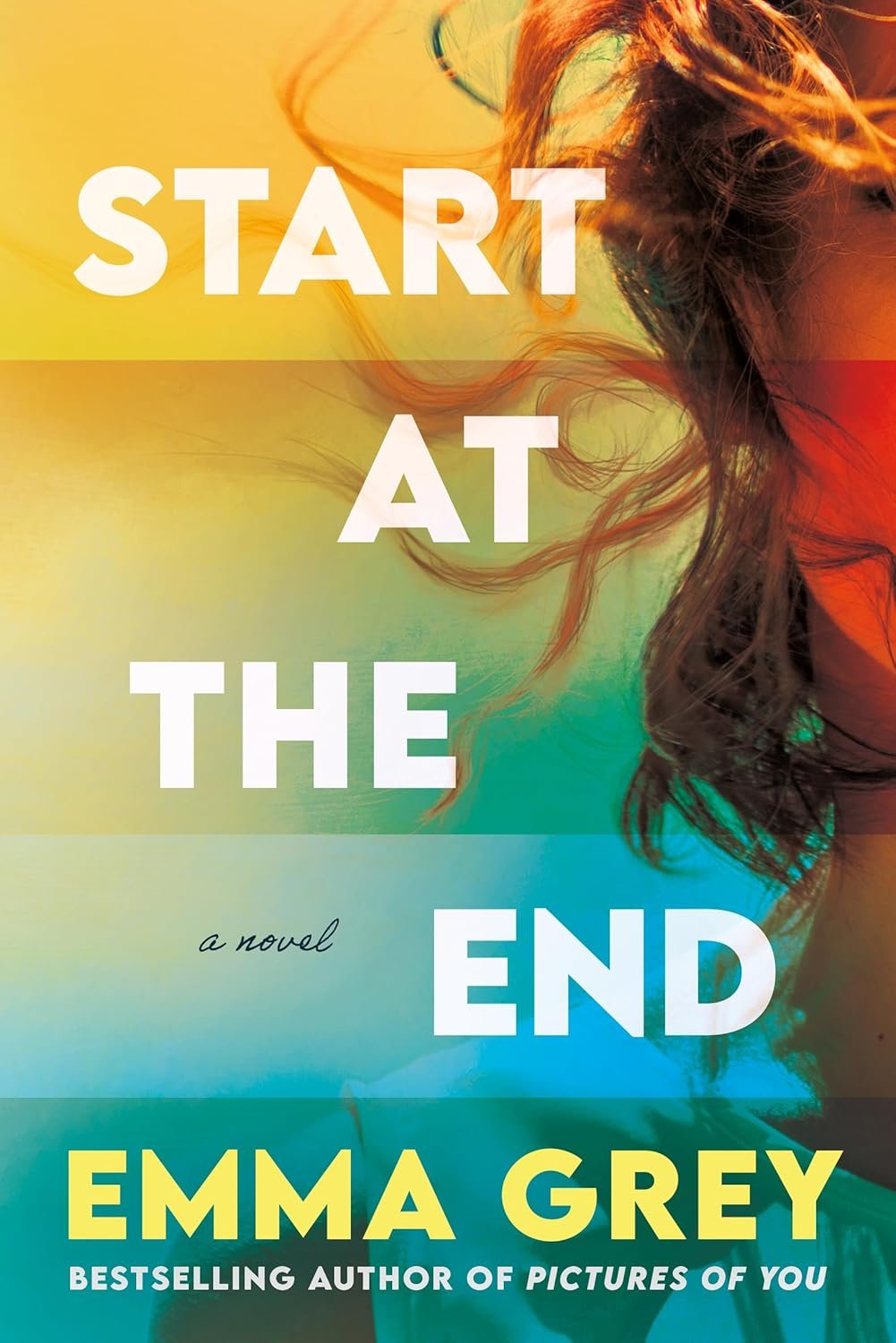 Title: Start At The End
Author: Emma Grey
Genre: Romance
Publisher: Zibby Publishing, 4/7/26
Source: Publisher
Why I Read It: Sent to me for my review / highly anticipated
My Rating: 4 Stars
I have absolutely loved Emma Grey’s two previous books and I fully expected to love this one too. Somehow, I forgot that she writes about loss and grief and when I got to the mid point of this book, I was so confused about what was real that I kept getting lost in what was actually happening. This is about Fraser and Audrey, a couple that falls in love but faces tragedy.
“Audrey and Fraser tumble into a romance for the ages. After an unlikely start, they fall deeply in love and dream of the life they’ll build together—until one tragic moment upends everything. Facing the unimaginable and wrestling with guilt, they’re left haunted by ‘what ifs,’ each asking where they would be if fate had spun a different story.”
People refer to this as a sliding doors story, as two possible outcomes are revealed in alternating chapters. What is consistent in both is what is important. I did prefer the way one timeline worked out more than the other. I thought that the beginning section was too fast and the epilogue skipped some details I might have liked to know. This book contains difficult topics including alcoholism and self harm.
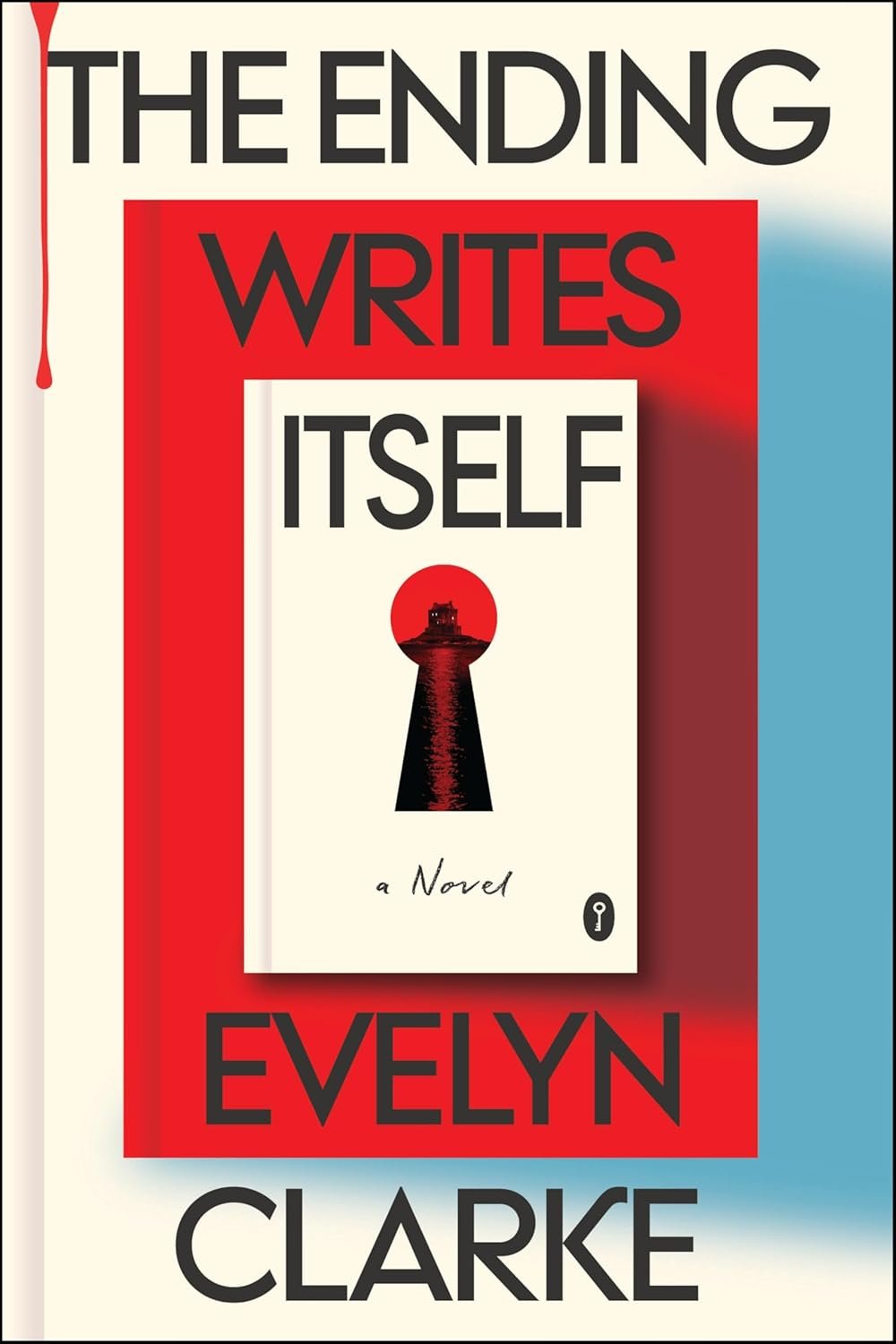 Title: The Ending Writes Itself
Author: Evelyn Chase
Genre: Mystery
Publisher: Harper, 4/7/26
Source: Publisher
Why I Read It: Sent to me for my review
My Rating: 4 Stars
The Ending Writes Itself is about a group of authors who are brought together in an old mansion and are put to competition to complete an unfinished book by a famous author who has recently passed away. The authors are from various writing genres and serve as a critique of the publishing industry. We all know what happens on a locked room island, right?
“Arthur Fletch, one of the world’s bestselling novelists, is a reclusive genius known for his iconic protagonists and fiendish twists. When six struggling authors are invited to spend a weekend on his private Scottish island, they arrive to discover a shocking secret: Arthur Fletch is dead . . . and his last book is unfinished. Desperate to publish the novel, Fletch’s agent and editor have summoned these writers in the hope that one of them will imagine a worthy ending for this final book. To sweeten the deal, they are offering an irresistible prize: in addition to ghost-writing the last chapter––for a mind-boggling sum––they will also help the lucky writer successfully re-launch their own career, guaranteeing future bestsellers. The catch: the writers have just seventy-two hours to finish Fletch’s magnum opus.”
This was a fun read, but I thought it was relatively predictable, at least with regards to who was the culprit. There were some interesting twists along the way though!
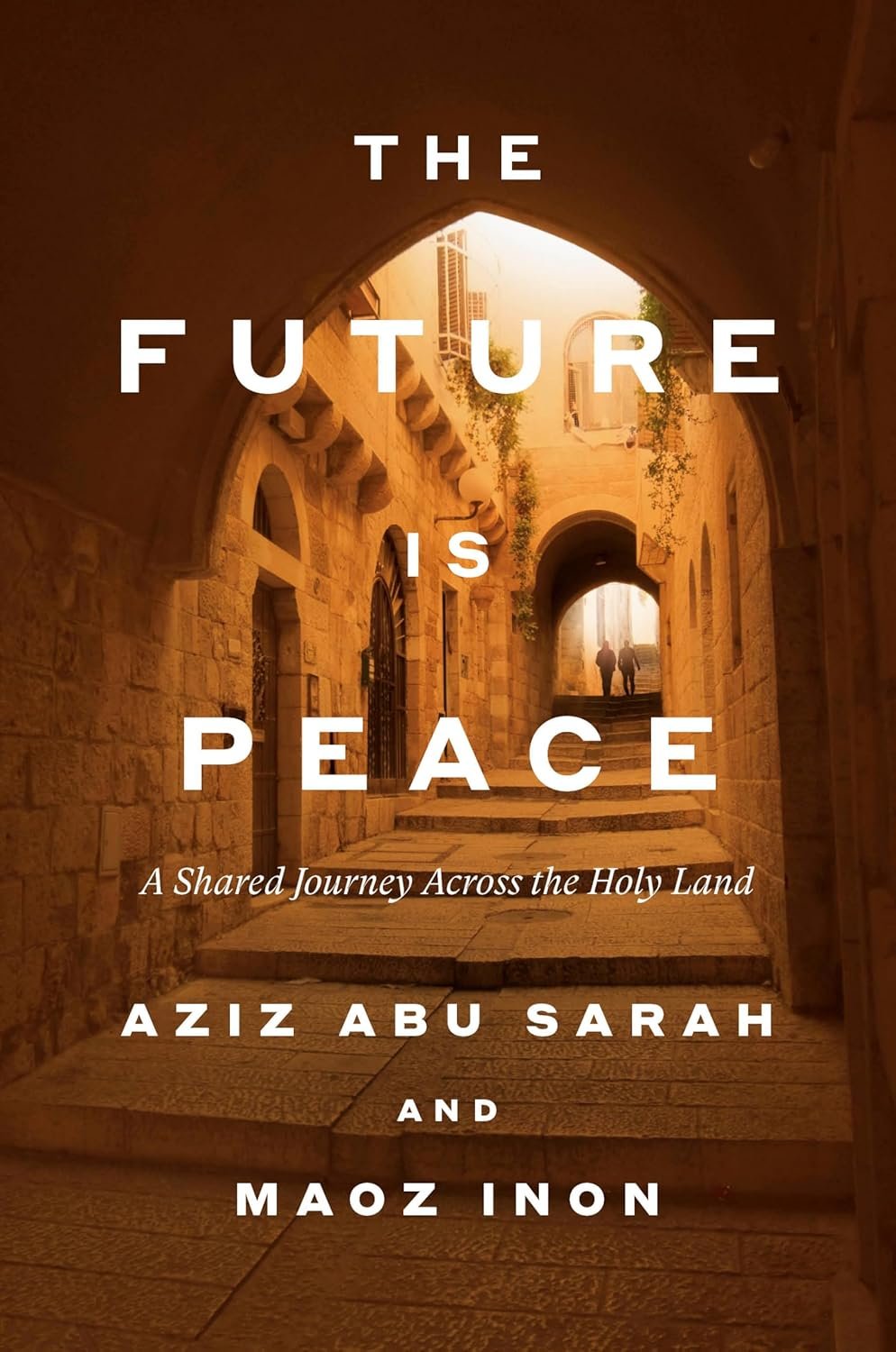 Title: The Future Is Peace
Author: Aziz Abu Sarah and Maoz Inon
Genre: Non Fiction
Publisher: Crown, 4/14/26
Source: Publisher
Why I Read It: Sent to me for my review
My Rating: 3 Stars
I had very high hopes for The Future is Peace by Aziz Abu Sarah and Maoz Inon, as it claims to be a joint journey across Israel and Palestine with multiple narratives shared. Unfortunately, while I think Aziz was quite open to learning from Maoz, in Maoz’s sections it seemed he was reluctant to talk about the Jewish connection to the land and instead shared more Christian and Muslim narratives, thus not actually contributing much to the overall journey shared by the pair.
“Palestinian Aziz Abu Sarah and Israeli Maoz Inon forged a bond of brotherhood when the world expected them to be enemies. Both have lost family to the conflict. Both have known the bitterness of righteous anger. Yet, they chose a different path. In The Future Is Peace, Sarah and Inon take readers on a transformative weeklong journey across a sacred and bloodstained land. Facing competing narratives, they explore how compassion and unity can pull humanity back from the precipice of blind hatred. Throughout their travels, they have been constantly asked: In the face of so much loss, how can we ever find hope? Their answer is always the same. One cannot find hope. We must create it.”
I will start by saying that I feel that the idea behind this book and the tours that Aziz and Maoz lead are important and necessary. Israelis and Palestinians have so much more in common than either people is willing to admit, and this could have been a look at those commonalities. Instead, the Jewish viewpoint is minimized and the narrative seems to call to Christian travelers and not those directly effected or involved in the land.
These two quotes are so important: “A peaceful Jerusalem would not belong exclusively to one people or one faith – it would belong to the world, a living symbol that peace is possible.”
“We are neighbors, yet we live as strangers. What would happen if we started talking to each other, meeting, shaking hands, sharing meals, learning about each other, asking questions, exchanging stories? We would recognize that our neighbors – those strange ‘others’ – are ordinary people just like us.”
And yet, this is not what the book demonstrated. I will start with Aziz.
Aziz is Palestinian and his brother was imprisoned and beaten which led to his death. He talks about the first and second intifadas but doesn’t explain what was done to Israeli civilians during those deadly times. It is not until the end of the book when he mentions suicide bombings at all, although he does acknowledge that Israelis and Palestinians “are conditioned to see each other as potential threats” and to meet each other with violence. He gives blame to Palestinian government as well.
He talks about his nephew who was attacked by Jewish settlers but never mentions the Jews who were killed in the same places. He talks about settlers and settler attacks and destruction of land by settlers and he considers the Israeli army a militant organization. While he is able to walk around the Old City of Jerusalem freely and go to the Muslim holy spot Al-Aqsa Mosque, he doesn’t acknowledge that Jews aren’t allowed there, while it is atop of Judaism’s holiest spot. He sees the aftermath of the Baruch Goldstein attack in Hebron as something that not only killed Palestinians, but thus restricted Muslims from visiting this holy site. In fact, it was the Jews who were restricted from their 2nd holiest site, only being allowed to enter one of the rooms 10 times per year.
After 10/7, Aziz reached out to Maoz. It is until page 199 until he talks about his attempt to get to know the Israeli Jewish past by going to Yad Vashem. But he uses this section to talk about attacks against Palestinians in 1948, lamenting that there is no memorial for these attacks (and I agree there should be – maybe in Palestinian controlled areas?). He says that the difference between the two people’s traumas is that the Palestinian trauma is ongoing. I would say Israeli trauma is too. A story told about a young Palestinian murdered in Gaza is so similar to the stories of young Israelis murdered or made to witness murder on 10/7. These common stories could be embraced to lead to the end of such incidents.
Maoz uses his own sections to share even further about how he feels about Israel, its army, and its government, with very little about the actual people of the land and the Jewish connection there. The book begins with his story – his parents were murdered on 10/7. He explained that his family previously lived on a kibbutz but needed to “escape” the life there. He speaks only from his own viewpoint and that of his siblings, including very few other Israeli perspectives. He buys into the idea that the 10/7 attacks had to happen: “When people are suffering, when they have no political agency and when nonviolent resistance is met by crushing military oppression, they reach for the last tool in the toolbox: devastating violence.” He never explains why this military control was in effect to begin with. He considered his time in the army a nightmare and talks about his disappointment that his son was going to the army, but two sentences later he admits that army service is required. He does include a very brief mention of Israelis being prohibited from entering parts of the West Bank, Israelis who were killed in Ramallah, and the 1929 attack in Hebron. He goes on to say that he is most at home in Nazareth – an almost completely Arab city within Israel with strong connections to Christianity and very little to Judaism.
The tour group mentioned throughout the book seems to concentrate on Christian history and stories, and not Jewish ones. Maoz distances himself from his own background. What I did not understand was why he opened a guest house in Nazareth, and not in a city like Jaffa where Jews and Arabs both live and are able to visit. Or why not open something in a Jewish area and invite Palestinians there? I’m not sure how he can teach multiple narratives when Jewish Israelis are excluded. When Maoz devotes one page to Jerusalem’s Jewish quarter, he quickly reverts back to talking about his hostel in Nazareth. The tour group seems to bring Israelis to the West Bank but not Palestinians to Jewish areas. How does this create cross cultural communication and appreciation? I would have loved to know what the Israeli tour guides share about their own families and culture. It seems likely that they only share how they were brought up to misunderstand Palestinians.
So, while I appreciate the idea behind this book, I do not think it is well executed and it does not read as a conversation or even one with “competing narratives.” Aziz and Maoz seem to have the same perspectives as one another and likely need others who are open to peaceful discussion but don’t deny the Jewish connection and history in Israel like Maoz seems to.
This post includes three of the books I read this month. They were all print books and all adult reads. Genres included romance, mystery, and non-fiction.
Have you read any of these books or do you want to? What have you been reading lately?